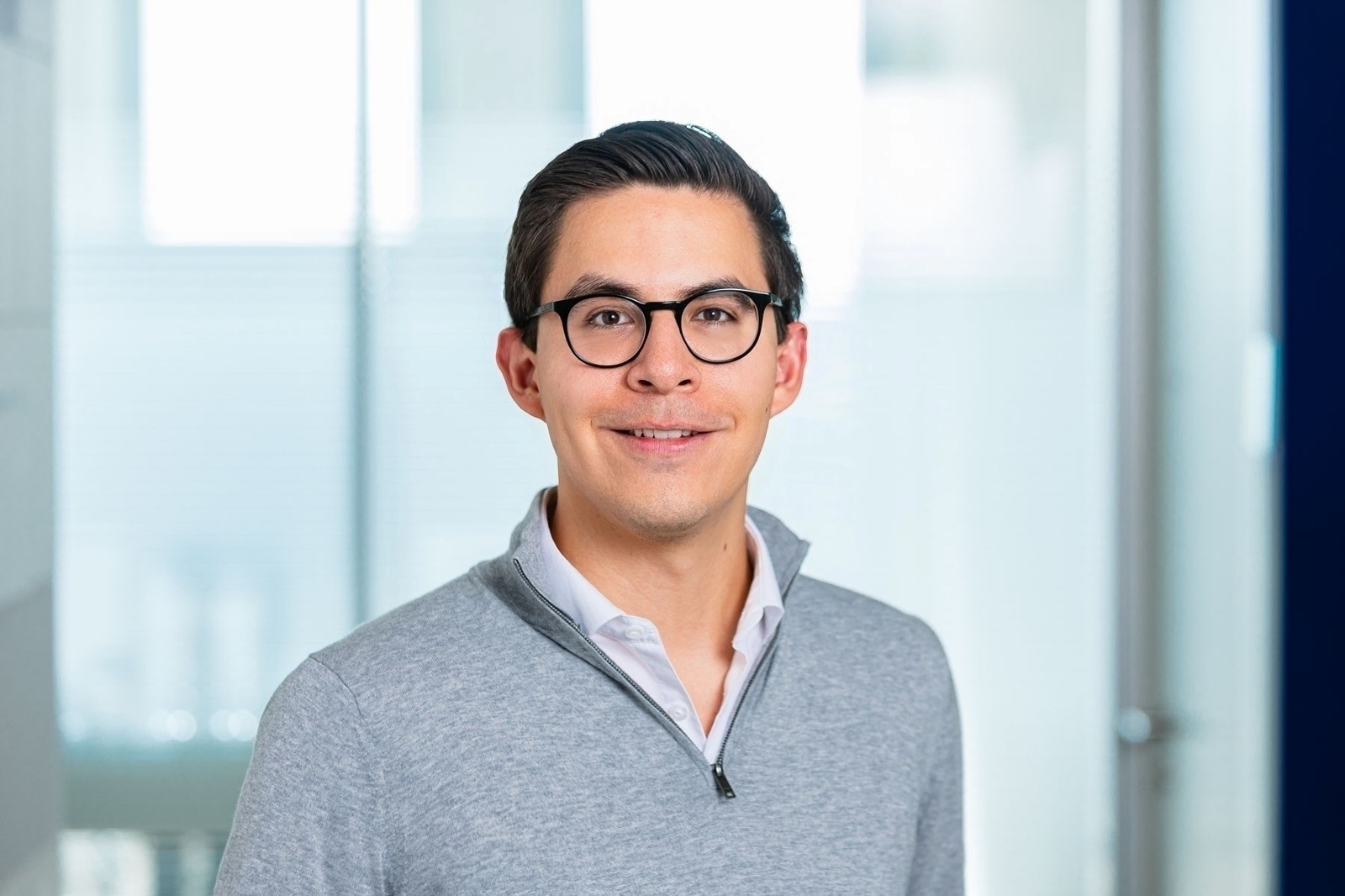
A culture of risk aversion and a bad reputation have held back hedge funds in Germany for two decades. Union Investment’s Jonas Hörsch believes the tide is turning, with allocators and talent both warming to the industry.
By Ben Coulthard, Hedgeweek®
Hörsch, head of liquid alternatives at Union Investment and senior portfolio manager on its fundamental long/short strategy, says that the sentiment towards German hedge funds is shifting on two fronts: German allocators to hedge funds are warming and top talent is emerging locally.
Data from the German Alternative Investment Association (BAI) supports Hörsch’s view. The share of investors allocating to hedge funds has risen from 15% last year to 21% this year, and 38% plan to increase their allocation, against just 5% looking to reduce it.
Allocators and managers are separate groups, but Hörsch argues similar issues have held both back for the last 20 years. Some of the reluctance, he says, is cultural. “There’s a certain culture of risk aversion in Germany… a focus on capital preservation, whereby historically hedge funds have been seen as excessively speculative” says Hörsch. “As a result, I think there has been a bit of prejudice against these types of strategies from some allocators.”
Risk is not the only reason why German allocators have shied away from hedge funds. A 2019 study by the German Association of Alternative Investors (BAI) stated that the three biggest issues for German hedge fund investors were public perception, transparency, and performance.
Instead, German allocators moved quickly into private equity and real estate, which now account for almost a third of institutional portfolios.
"Maybe hedge funds had just fallen off the edge a bit,” says Hörsch. “But there have always been local and strong private equity managers in Germany, more so than I'd say local hedge fund managers.”
German politicians compared hedge funds to Heuschrecken, swarms of locusts, in the early 2000s. The label has dogged hedge funds ever since.
“The remark was really aimed at corporate raiders, but somehow it gave a lot of these absolute return strategies a bad reputation,” Hörsch notes.
Allocators now have fresh reasons to look again. The global hedge fund industry has exploded in recent years, with global hedge fund AuM hitting record highs of over $5tn in 2026 and rapidly expanding.
“Allocators are seeing a boom in the hedge fund industry overall, not specific to Germany,” says Hörsch. “There are inflows, platforms are getting big, there’s a lot of attention on it.”
More recently, conversations have picked up among allocators about concentration risks in their portfolios.
“Equity valuations are high, and allocators I’ve spoken to have voiced concerns over how dependent their portfolios are on mega trends like AI, and how much real diversification they have,” he says.
“If the main trade in your portfolio is the AI trade, you don't have a lot of differentiated sources of alpha. And this has led to some allocators looking for something that diversifies them away from traditional asset classes, something that can give them sources of alpha that are different from mega trends like AI.”
Some allocators are also uneasy about the size of their private markets allocations. As the stigma around hedge funds being “wild west strategies” begins to fade, their role in portfolios is being reassessed.
“I think now there is an understanding what these strategies can bring, and that there is value in looking off the beaten path to find some gems that have been running under the radar.”
This trend isn’t just an opinion, however. The average allocation in the portfolio has also grown year on year according to the BAI, from 4.75% to 7.00% this year.
In Hörsch’s opinion, “These are encouraging signs for the local ecosystem.”
Growing local demand is also helping to build Germany’s own talent pool. “Local interest attracts talent locally,” Hörsch says. Brexit may have played a part too.
“The industry had centralised most things in London, and hence there wasn't really the need for a second or third hub in Europe.”
Hörsch himself was based in London until 2024 before moving to Frankfurt to join Union Investment. Whilst he asserts that he “didn’t really move because of Brexit”, he acknowledges that Brexit “may be putting the local continental European ecosystem more on the map.”
However, Hörsch makes it clear that many of the factors influencing Germany’s perspective and positioning on hedge funds were internal. In some ways, these issues can be seen as emblematic of wider challenges the country is facing:
“A lot of the ingredients are there. There's an educated workforce. There's local know-how. There's an increasingly vibrant startup scene.” The question is whether the country is ready to embrace risk.
“Whether things succeed from here, in my view, is dependent on whether Germany manages to flick the mental switch and move from administering, managing, and preserving a high level of wealth, to investing for the future and going into a mindset of taking calculated risks.”
“The jury is still out on that”, Hörsch conceded, “We view our own efforts of building out liquid alternatives at Union Investment as a small contribution to this. In my view, there is no reason why Germany’s financial industry cannot be competitive on an international scale.”
Hörsch heads a team of seven investment professionals, managing market-neutral strategies across fundamental equities, systematic equities, interest rate derivatives, and thematic long/short approaches. The exact assets are undisclosed but are understood to be well in excess of $1bn in notional.
Together with portfolio manager Florian Merkel, Hörsch also manages Union Investment’s market-neutral equity fund UniInstitutional Equities Market Neutral, which launched in 2019 and currently has around €320m in assets. The strategy, in which the team operate as sector specialists, follows a diversified, bottom-up stock picking approach focused on European equities.
Hörsch insists that his argument is not that German funds are better, but that “there are competitive hedge fund teams in Germany too”.
“Say, if you go on holiday, are you going to queue for the super Instagrammable spot? Or are you going to look for the somewhat off the beaten track place? That could be some of the managers in Germany. I think it is worth taking a closer look off the beaten track.”
