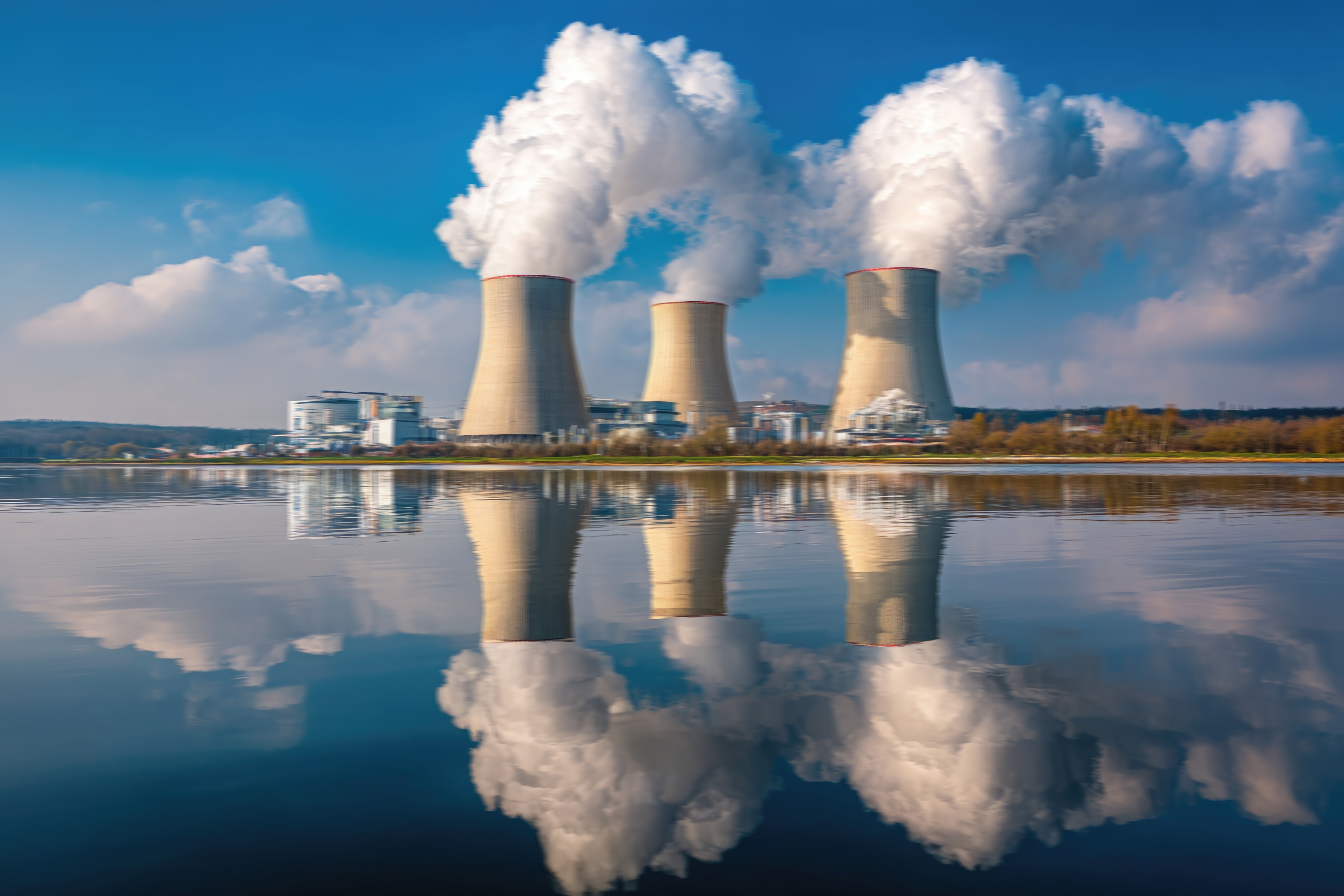
Global nuclear M&A activity reached $10.3bn in the first nine months of 2026, putting the sector on course for one of its strongest years on record as artificial intelligence infrastructure demand, energy security concerns and growing private capital interest drive investment, according to new research from White & Case.
The law firm's analysis, conducted in partnership with Mergermarket, recorded 60 nuclear-related transactions during the period, approaching the 82 deals completed throughout 2025 – the highest annual total since 2018. Transaction value is also nearing last year's full-year figure of $11.2bn.
Third-quarter deal value increased 37.5% year-on-year to $3.3bn, compared with $2.4bn during the same period in 2025, while transaction volumes remained unchanged at 16 deals.
Europe, the Middle East and Africa recorded particularly strong activity, with deal value reaching $3.9bn during the first nine months of 2026, more than double the region's $1.5bn total for the whole of 2025. This brought EMEA close to the US, where nuclear M&A transactions totalled $4bn over the same period.
The increase in dealmaking has been supported by growing electricity requirements from AI infrastructure and hyperscale data centres, which are driving demand for reliable, low-carbon power generation. Governments are also prioritising nuclear energy as part of wider strategies to improve energy security, industrial competitiveness and resilience against geopolitical uncertainty.
Regulatory changes are providing additional support for investment. The UK is pursuing reforms designed to streamline project approvals, while the US Nuclear Regulatory Commission has introduced a new licensing pathway for advanced reactors. The European Commission's 2026 small modular reactor strategy also calls for greater cooperation between national regulators.
Financing structures are evolving alongside the sector, with governments and private investors exploring public-private partnerships, state-backed financing and risk-sharing arrangements to improve the commercial viability of nuclear projects, particularly small modular reactors and emerging technologies.
Simon Stuttaford, partner in the Project Development & Finance Group and Global Energy Industry Group at White & Case, said that while the recent technology selloff could affect assumptions about future data centre development, the longer-term investment case for nuclear energy remains supported by energy security, electrification and industrial demand.
He added that greater selectivity among technology companies and a stronger focus on project financing and execution could influence future transactions, with opportunities emerging across nuclear generation, advanced reactor technologies, fuel supply, services and supporting infrastructure.
