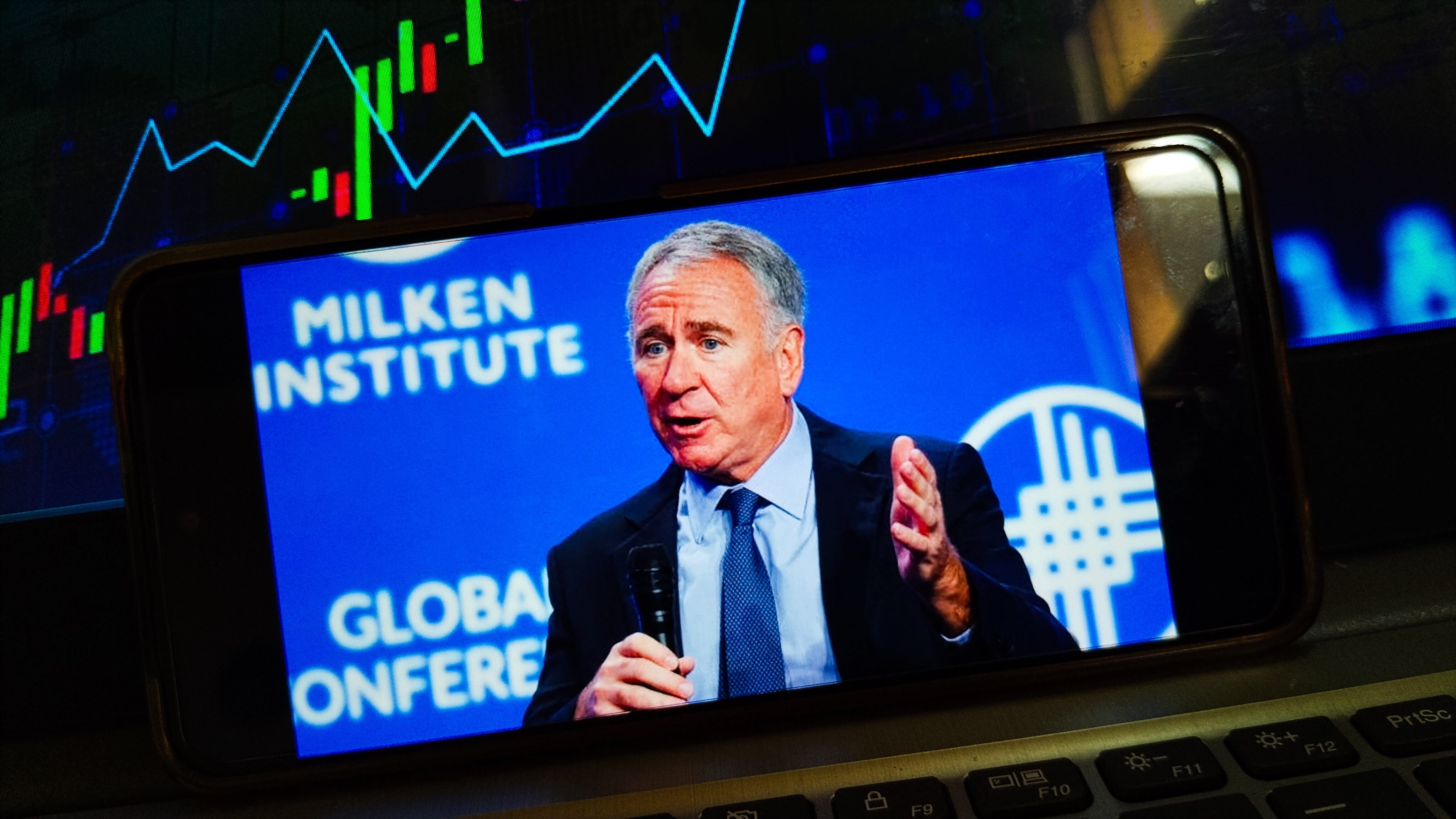
Citadel founder Ken Griffin has warned that the US faces an increasingly unsustainable fiscal trajectory, calling for productivity-driven economic growth and reforms across Europe to address mounting debt pressures, according to a report by Fortune.
Speaking at the Citadel Securities Future of Global Markets conference in New York, Griffin said the US government's fiscal position was "clearly not in order", following confirmation that the federal budget deficit reached $2tn in fiscal 2026, with interest payments accounting for more than half that amount.
The hedge fund billionaire argued that accelerating economic growth should take precedence over other fiscal measures, urging policymakers to prioritise investment in technologies capable of delivering sustained productivity gains.
"We really need to play the productivity card as hard as we can," Griffin said. "Grow the damn economy."
Griffin also criticised Europe's economic performance and labour restrictions, arguing that US allies must pursue reforms to strengthen their economies and reduce their dependence on American defence spending.
He singled out France's working-hour restrictions and described US tariff tensions with Europe as counterproductive, arguing that stronger European growth would benefit both sides of the Atlantic.
Beyond European reforms, Griffin called for greater US investment in data centres, nuclear fusion, robotics and other technologies with the potential to drive productivity over the next two decades.
He also identified education and immigration as priorities, arguing that attracting highly skilled workers from overseas would strengthen America's long-term economic competitiveness.
"The entire Western world is in the same boat together," Griffin said, warning that trade disputes and economic confrontation would do little to resolve shared fiscal challenges.
His comments highlight growing concern among leading hedge fund managers over the sustainability of US borrowing, as rising debt-servicing costs and persistent fiscal deficits complicate the outlook for economic growth and financial markets.
Arini's YTD losses exceed 21% as distressed bets deteriorate
London-based credit hedge fund Arini Capital Management has suffered further losses in October, taking its flagship strategy's decline for…
More
Chinese quant hedge fund Lingjun attracts $300m in overseas capital
Chinese quantitative hedge fund Lingjun Investment has secured more than $300m from international investors as it resumes fundraising…
More
Former Brevan Howard PM sued over $3.5m in unpaid trading profits
Former Brevan Howard portfolio manager Robert Sicari is facing a lawsuit from a quantitative researcher who claims he was denied up to…
More
