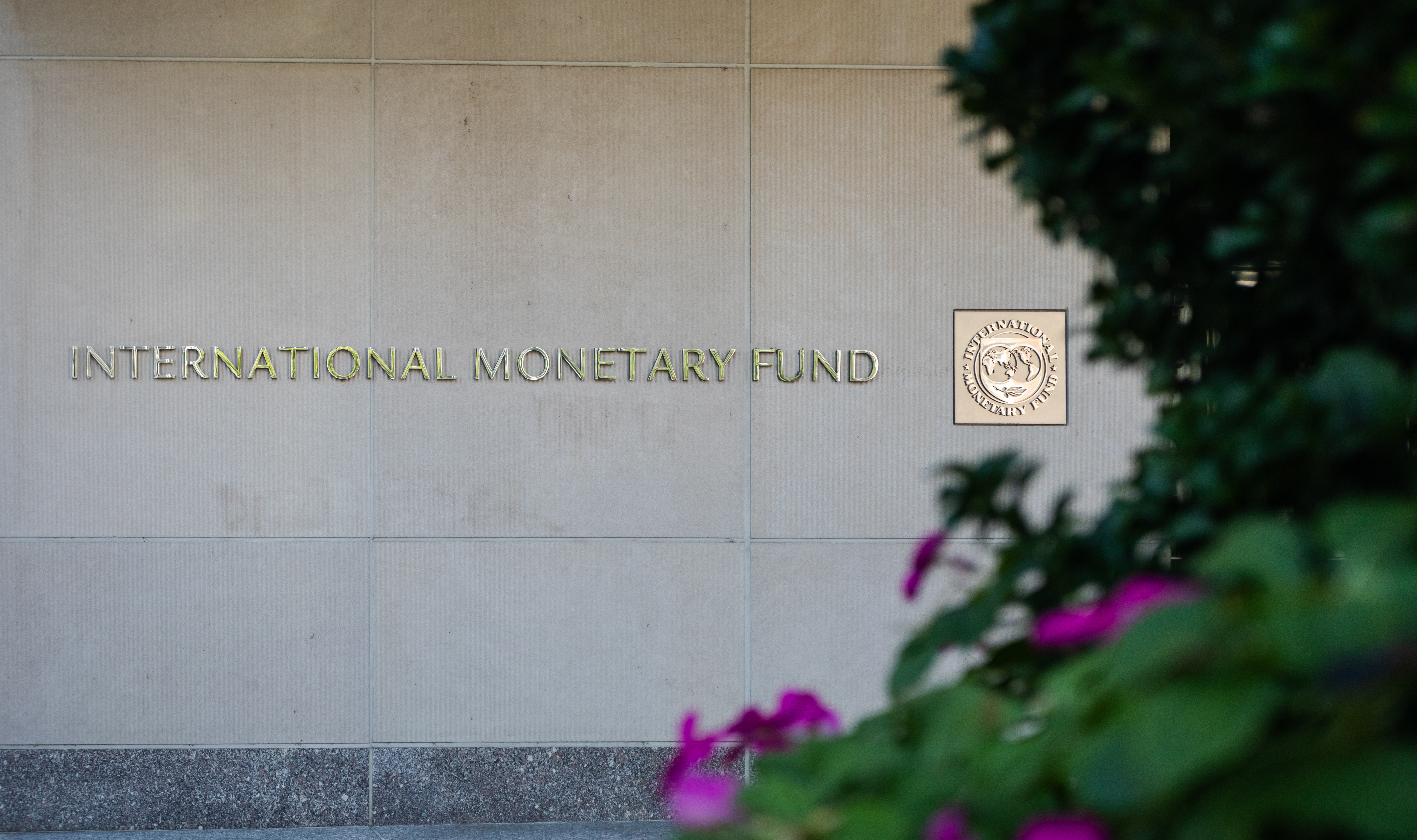
The International Monetary Fund (IMF) has warned that a correction in AI-related investments, rising sovereign bond yields and cyberattacks could threaten global financial stability, despite continued resilience across markets, according to a report by Reuters.
In its latest Global Financial Stability Report, the IMF cautioned against investor complacency, warning that existing market vulnerabilities could amplify shocks and create systemic risks.
The fund said AI investment has helped offset economic pressures stemming from the war in the Middle East and broader policy uncertainty. However, growing evidence suggests that AI development may require less capital than anticipated, while the economic benefits could fall short of expectations.
Athanasios Vamvakidis, deputy director of the IMF's Monetary and Capital Markets Department, warned that an AI market correction could affect the real economy through reduced wealth and investment, with potential spillovers across global financial markets.
The IMF highlighted the growing use of leverage in AI-related investments as a particular concern. Hyperscalers now account for 10% of global investment-grade bond issuance, compared with less than 1% in 2024, increasing the potential for forced selling and volatility in the event of a downturn.
The fund called on policymakers to curb excessive leverage, including exposure through derivatives and margin loans.
Sovereign bond markets were identified as another source of risk, with higher energy prices, elevated public debt and persistent fiscal deficits adding upward pressure on yields.
The IMF warned that markets face growing challenges in absorbing substantial government and private sector debt issuance, particularly as central banks reduce their balance sheets and financing becomes increasingly dependent on price-sensitive investors.
However, the report noted that bond markets have so far absorbed these pressures without significant disruption, with hedge funds successfully unwinding some repurchase agreement borrowing without triggering wider instability.
Cybersecurity also remains a concern, particularly in emerging markets where limited resources and reliance on a small number of technology providers increase vulnerabilities.
According to the IMF, software providers have had almost no time to address vulnerabilities before exploitation in more than 70% of cases recorded in 2026, up 20 percentage points from the previous year. The fund warned that AI could further increase the sophistication of cyberattacks.
Despite these risks, IMF stress tests indicated that global banks retain broadly resilient capital buffers under a hypothetical downturn involving an AI slowdown and bond market instability.
However, banks accounting for 22% of global banking assets were found to have weak capital levels under the stress scenario, compared with 18% in the IMF's 2025 assessment.
Hedge fund shorts REA Group, betting on deeper Australian housing downturn
Australian hedge fund Bristlemoon Capital has taken a short position in REA Group, betting that a downturn in the country’s housing market…
More
Goldman Sachs upgrades equities and government bonds amid rising yields
Goldman Sachs has upgraded its outlook for equities and 10-year government bonds, citing improving return prospects for sovereign debt…
More
Mayer Brown appoints former CFTC senior counsel Danielle Abada as partner
Global law firm Mayer Brown has appointed Danielle Abada, a former senior official at the US Commodity Futures Trading Commission (CFTC),…
More
