PARTNER CONTENT
By Gregory Knapp Vice President of Business Development, Opus Fund Services
Over 80% of fund start-ups say securing allocator capital is their biggest challenge…Which is not surprising! Fund managers have limited time and resources, yet the impediments to raising capital have become increasingly complicated over time. With the number of private funds increasing annually by 2.4% from 2018 to over 14,000 in 2023, it’s been increasingly difficult to differentiate from the crowd and optimize capital-raising and marketing efforts. The challenges include: An expanding qualified investor base In 2020, DQYDJ estimated there are 13.7 million accredited households. That equates to 10.6% of all households controlling $73.3 trillion of Americas wealth. Changing regulations There are new strict rules governing the type of marketing allowed by private funds. On 22 December 2020, the SEC adopted amendments (the final rule) to Rule 206(4)-1 under the Investment Advisers Act of 1940. This was the first substantive modernization of the rules since their initial adoption in 1961. With serious penalties for failing to comply, it has a major impact for nearly every fund manager in the USA. It is now more essential than ever that you maintain a transparent audit trail showing who you are communicating with, how, why, and when. Shifting demographics The demographic and therefore needs and expectations of accredited investors is shifting. According to a study released in 2022 by Pew Research Center, 38% of respondents under the age of 65 consider themselves to be almost constantly online. And that number is constantly increasing. So, focusing marketing efforts using a tech-based solution is increasingly being demanded by sophisticated investors. Lack of institutional technology Despite all the challenges, most fund managers try to achieve capital raising using a combination of spreadsheets and email. And with the maximum number of rows in an Excel spreadsheet is a little over 1 million. The tools are clearly not fit for purpose. Inevitably investors get left behind, lacking the required information they need to make an informed investment decision. At a time when every subscription matters, fund managers leave money on the table and fail to raise the maximum possible capital. Help is needed, and the complimentary Opus CRM is a vital tool for fund managers of all sizes. It provides multiple benefits, from organizing contacts, storing investor data, to automating key tasks. It helps fund managers track and organize their relationships with existing and future investors. It can also be a centralized, organized hub that enables consistent investor communications. This information can then be used to optimize investor prospecting and improve customer service. Opus helps to address changing investor demographics through the development of our proprietary client toolkit featuring its fully integrated CRM, Digital Subscriptions, real time Cap Table and Digital Capital Calls applications. The Opus CRM is used to gather interactions with investors into one central place to improve customer experience and satisfaction. This affords better investor retention, increased prospect conversion and detailed analytics. Opus CRM offers the following benefits:
And when it’s time for the Investor to allocate capital, the Opus Digital Subscription workflow allows the subscription to be completed fully digitally, in minutes not hours. The CRM tracks which prospects have been sent the Digital Subscription, and what progress they have made in completing it. This means proactive communications can be made ensuring that the investor conversion does not fall at the last hurdle or miss key funding dates. The ability to raise capital in the inherently opaque private fund marketplace is increasingly complicated. However, the use of Opus CRM and associated client toolkit results in greater transparency creating visibility through a targeted network of investors with specific investment preferences. With increasing operational expenses, the value of the complimentary Opus products might be the difference between a successful launch and one failing to get off the ground. In a crowded marketplace dominated by larger players, the Opus CRM and associated client toolkit should be considered as an important part of your fundraising strategy.
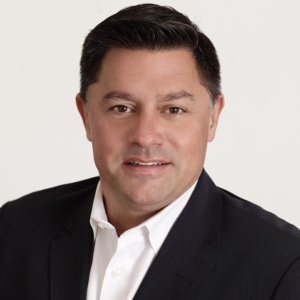 Gregory Knapp, Vice President of Business Development, Opus Fund Services – Gregory Knapp is the Vice President of Business Development at Opus Fund Services based in Austin, Texas. Greg has a deep working knowledge across a range of investment strategies, including Hedge, Private Equity, Venture Capital, and Digital Assets. Greg's 20 years in the industry has seen him undertake a number of business development and marketing roles across a range of financial service companies. Greg is an alumni of the University of California at Santa Barbra.
Building the quantitative infrastructure for the next generation of institutional markets
PARTNER CONTENTKatia Babbar, CEO of Immersive Finance, discusses the changing demands of institutional derivatives markets and why…
More
Making the case for hedge funds as next-generation diversifiers
PARTNER CONTENTAs part of Wellington's broader InvestorExchange podcast, this special mini-series takes listeners inside our hedge fund…
More
Making the case for hedge funds as next-generation diversifiers
PARTNER CONTENTAs part of Wellington’s broader InvestorExchange podcast, this special mini-series takes listeners inside our hedge fund…
More
